
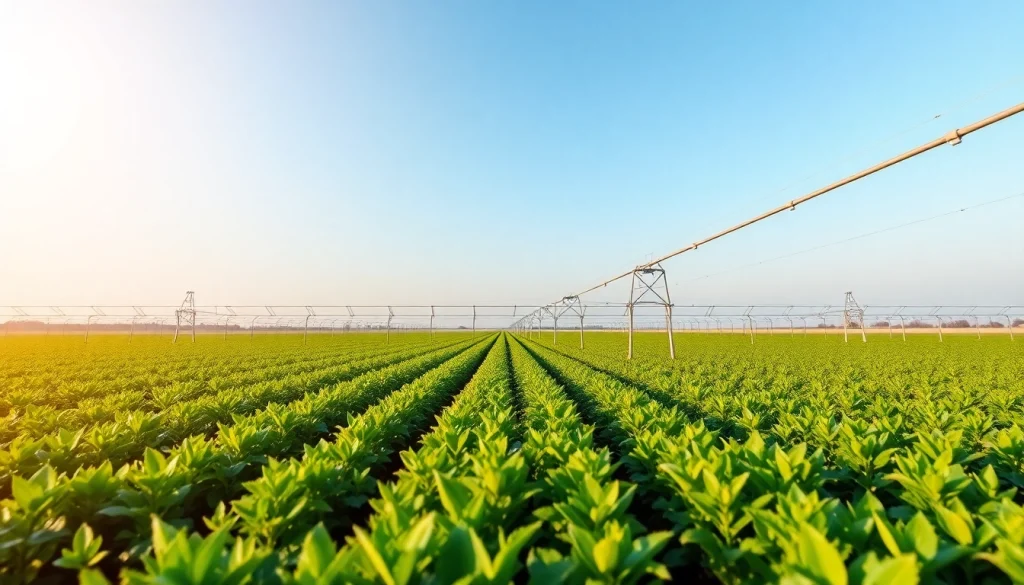
Understanding the Basics of Land Irrigation
What is Land Irrigation?
Land irrigation is the artificial application of water to soil or land to assist in the growth of crops and vegetation. It plays a crucial role in agriculture, particularly in arid and semi-arid regions where rainfall is insufficient to meet crop water requirements. Various methods of land irrigation can ensure optimal water usage, thereby enhancing agricultural productivity and sustainability.
The Importance of Efficient Land Irrigation
Efficient land irrigation is essential for increasing agricultural output, especially as global populations rise and water resources become scarcer. By implementing effective irrigation strategies, farmers can maximize crop yields, reduce water wastage, and minimize soil salinization. Effective irrigation not only supports food security but also contributes to the sustainability of ecosystems and the environment by reducing the likelihood of drought-related crises.
Types of Land Irrigation Systems
There are several types of land irrigation systems, each suited for different agricultural conditions and crop types. These include:
- Surface Irrigation: Water flows over the soil surface to irrigate crops. This method is common in many parts of the world due to its low cost.
- Drip Irrigation: Also known as trickle irrigation, this technique delivers water directly to the roots of plants through a network of tubing and emitters, making it highly efficient.
- Sprinkler Irrigation: Resembling natural rainfall, this system spray water onto crops, making it appropriate for various field shapes and sizes.
- Subsurface Irrigation: Water is applied below the soil surface, allowing it to be absorbed more effectively by the plants while reducing evaporation.
- Center Pivot Irrigation: This method uses rotating sprinkler systems along a pivot to cover large areas of farmland, common in modern agriculture.