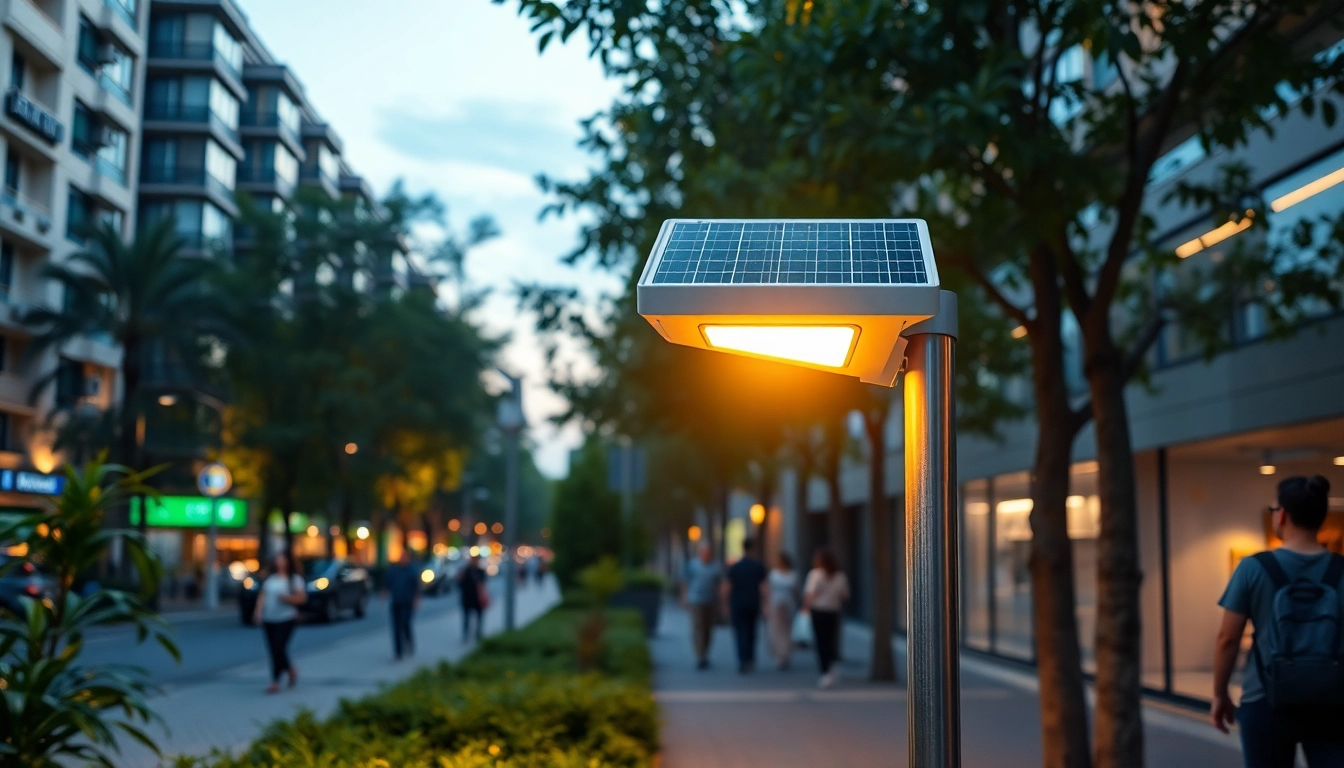
Understanding Solar Street Lights
As urban landscapes evolve, the demand for sustainable and efficient outdoor lighting solutions has never been higher. Solar street lights have emerged as a prominent choice, merging cutting-edge technology with eco-friendly practices. These innovative lighting systems harness solar energy, providing illumination that is not only effective but also reduces reliance on fossil fuels. A well-designed solar street light can transform public spaces, enhance safety, and lower energy costs, making them an attractive option for municipalities and property developers alike.
What Are Solar Street Lights?
Solar street lights are self-contained outdoor lighting fixtures that utilize solar energy to provide illumination. Comprising solar panels, LED lights, a battery, and a controller, these systems operate independently of the traditional electrical grid. By capturing sunlight during the day, solar street lights store energy for use at night, ensuring consistent lighting without incurring ongoing electricity costs.
Key Components and Technology
The main components of a solar street light include:
- Solar Panels: Typically made from monocrystalline or polycrystalline materials, these panels convert sunlight into electricity.
- LED Lights: Highly efficient LED bulbs provide bright illumination while consuming minimal energy.
- Batteries: Lithium-ion (LiFePO4) batteries store the captured energy, providing power when sunlight is not available.
- Controller: This component regulates the charging and discharging of the battery and ensures the LED lights are turned on and off at the appropriate times.
How Solar Street Lights Function
During daylight hours, solar panels absorb sunlight and convert it to electrical energy. This energy is used to charge the battery, which powers the LED lights once the sun sets. Many solar street lights include smart features such as motion sensors, allowing them to adjust brightness based on activity levels. This enhances energy efficiency and ensures that lighting is provided only when needed.
Advantages of Solar Street Lights
Cost-Effectiveness and Long-Term Savings
One of the primary advantages of solar street lights is their cost-effectiveness. While the initial investment might be higher than traditional street lights, the long-term savings are significant. Solar lights eliminate electricity costs, reduce maintenance expenses, and have a longer lifespan than conventional lighting systems, which enhances their economic viability.
Environmental Impact and Sustainability
Solar street lights contribute positively to the environment by utilizing renewable energy. This transition reduces carbon footprints and supports sustainability initiatives. In many cases, municipalities can reduce greenhouse gas emissions significantly by switching from traditional lighting to solar-powered systems.
Maintenance and Longevity of Solar Systems
Solar street lights are designed for durability with low maintenance requirements. Most high-quality solar lights can last for over 50,000 hours of operation, and the LiFePO4 batteries typically have a lifespan of 5-8 years. Regular maintenance primarily involves cleaning the solar panels to ensure optimal energy absorption.
Installation and Setup Process
Step-by-Step Installation Guide
The installation process for solar street lights is straightforward and can often be completed without specialized tools. Here’s how:
- Selecting the Location: Identify the best location for optimum sunlight exposure throughout the day.
- Preparing the Site: Clear the area of debris and ensure a stable ground for installation.
- Assembling the Components: Attach the solar panel and light fixture to the pole according to the manufacturer’s instructions.
- Mounting the Pole: Secure the pole in the ground or a concrete base, ensuring it’s upright and stable.
- Testing the System: Once installed, test the system by covering the solar panel to confirm the light activates as expected.
Common Installation Challenges
While installation is generally simple, challenges can arise, such as:
- Insufficient Sunlight: Areas with excessive shading can impede performance, requiring adjustments in placement.
- Ground Conditions: Rocky or unstable ground may require additional support structures.
Tips for Optimal Placement and Performance
To ensure solar street lights operate effectively:
- Install lights in areas that receive at least 6-8 hours of sunlight daily.
- Maintain a clear line of sight to the sun, avoiding potential obstructions.
- Position lights at a height that maximizes their luminous reach for safety and visibility.
Addressing Common Concerns
Performance During Inclement Weather
Many potential users express concern over how solar street lights perform during extended periods of cloudy or rainy weather. Most quality solar systems are designed to operate effectively even under such conditions. For instance, PowerDream’s solar street lights can maintain illumination for 3-5 days on a full battery charge, ensuring reliability in adverse weather.
Brightness Levels and Safety Standards
Regarding brightness, solar street lights utilize high-lumen LEDs that can rival traditional fixtures. With brightness levels ranging from 548 to 12,000 lumens, they meet safety standards for public lighting, providing adequate visibility for pedestrians and vehicles alike. This ensures that they are suitable for main roads, parking lots, and walkways.
Battery Life and Replacement FAQs
Battery life is a crucial factor when assessing solar street lights. The LiFePO4 batteries used in many systems can last between 5 to 8 years. Once battery performance declines, replacement is usually straightforward and can be performed without professional assistance, making maintenance cost-effective and easy.
Future Trends in Solar Street Lighting
Technological Innovations for 2025 and Beyond
The future of solar street lighting is promising, with advancements in technology expected to enhance efficiency and functionality. Innovations such as integrated smart technology, which allows for remote monitoring and management, will become more prevalent. Additionally, improvements in battery technology may extend life and capacity.
Integration with Smart City Systems
As cities move towards becoming “smart,” the integration of solar street lights into broader urban management systems will become crucial. Features like real-time data collection on traffic, weather, and energy usage can be incorporated, allowing for better resource management and public safety measures.
Case Studies and Successful Implementations
Numerous cities have successfully implemented solar street lighting solutions, demonstrating their effectiveness. For instance, cities like Los Angeles and San Diego have reported significant reductions in energy costs after transitioning to solar street lights. These case studies provide valuable insights for municipalities considering solar options and highlight the long-term benefits of such investments.