What Are Engineered Composites?
Definition and Overview
Engineered Composites refer to advanced materials composed of two or more constituent materials, combined in a way that optimizes their individual properties. This innovative class of materials typically combines a polymer, metal, or ceramic matrix with other reinforcing materials, such as fibers or nanomaterials, to enhance performance characteristics like strength, weight, and durability. These composites are intentionally designed and manufactured to meet the specific needs of various industries, paving the way for groundbreaking applications in technology, aerospace, automotive, and more. Their ability to be tailored means they can outperform homogeneous materials in diverse applications, making them an exciting area of study and production. More information about Engineered Composites can provide deeper insight into this revolutionary field.
Types of Engineered Composites
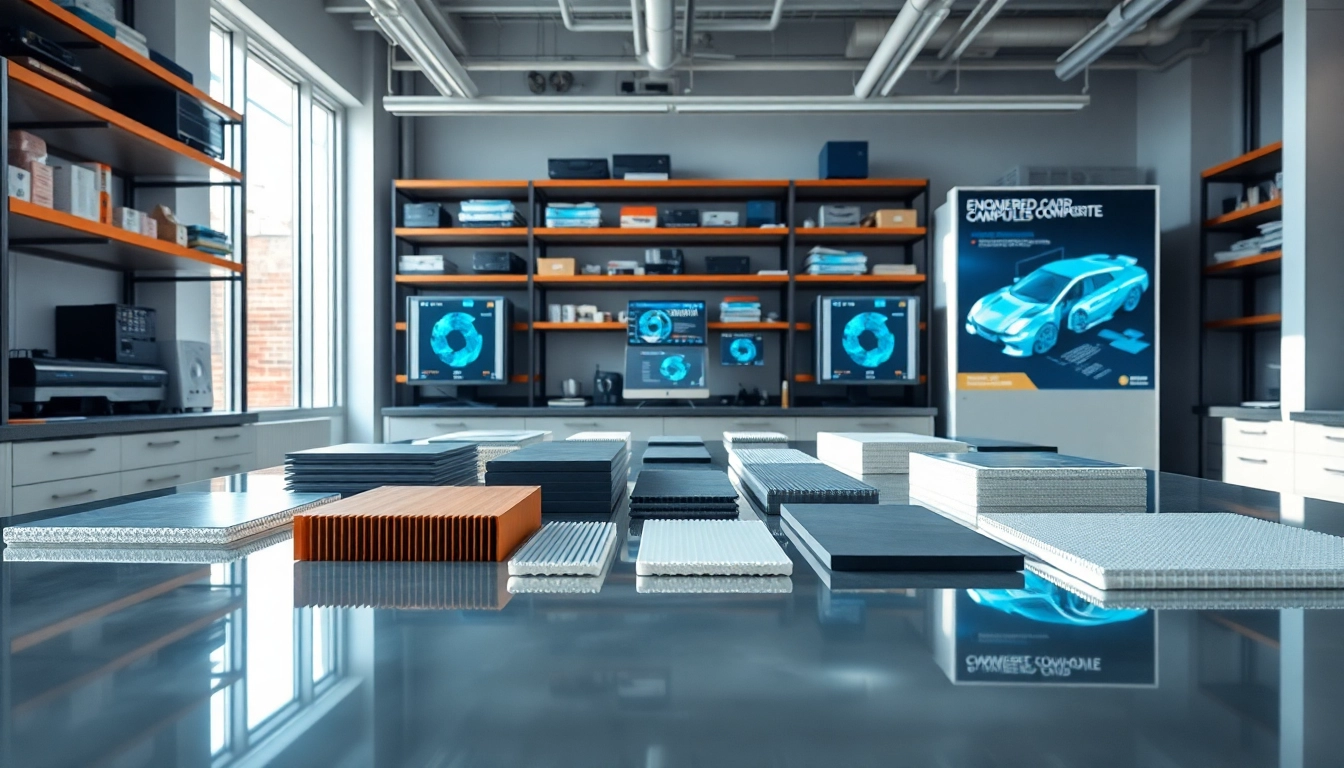
Engineered Composites can be grouped into several categories, each designed to meet specific performance criteria:
- Polymer Matrix Composites (PMC): These are made with a polymer resin as the matrix; they are lightweight and versatile, commonly used in consumer goods and aerospace.
- Metal Matrix Composites (MMC): In MMCs, metal is combined with other materials to enhance strength and thermal resistance. These are typically utilized in automotive and aerospace applications.
- Ceramic Matrix Composites (CMC): These materials resist high temperatures and are used in applications that require high thermal stability, such as aircraft engines.
- Hybrid Composites: Combining different materials (e.g., fibers and polymers), hybrid composites are designed to exploit the properties of their constituents, optimizing performance in various conditions.
Key Properties and Benefits
Engineered Composites are renowned for their unique properties, which include:
- High Strength-to-Weight Ratio: Engineered Composites typically possess superior strength while being lightweight, making them ideal for high-performance applications.
- Corrosion Resistance: Many composites resist environmental degradation better than metals, leading to longer service life and reduced maintenance costs.
- Tailored Properties: By adjusting the composition and manufacturing processes, engineers can precisely control the mechanical and thermal properties to suit specific applications.
- Improved Durability: Enhanced wear resistance and toughness contribute to reduced failure rates in demanding environments.
Applications of Engineered Composites
Aerospace and Automotive Industries
In aerospace and automotive sectors, the weight of the material is critical for efficiency and fuel consumption. Engineered Composites play a vital role in designing components that enhance aerodynamic performance while maintaining structural integrity. For instance, modern aircraft often incorporate carbon-fiber-reinforced polymers in wings and fuselages, leading to significant weight savings along with improved fuel efficiency.
In automobiles, the use of engineered composites in body panels, interior components, and structural elements contributes to vehicle performance, safety, and design flexibility. The automotive industry continues to explore new applications, focusing on lightweight designs that improve overall energy efficiency and reduce emissions.
Construction and Infrastructure
Engineered Composites have also made inroads into construction, particularly in infrastructure projects where properties like strength, corrosion resistance, and longevity are paramount. Common applications include:
- Reinforced Concrete: Composites, such as glass or carbon fiber, are increasingly used to reinforce concrete structures, enhancing their tensile strength and durability.
- Composite Rebar: Corrosion-resistant composite rebar offers durable alternatives to traditional steel, especially in environments prone to corrosion.
- Pipes and Tanks: Engineered composites are utilized in the manufacturing of storage tanks and drainage pipes, where chemical resistance is essential.
Consumer Products and Electronics
Domestic products, from sports equipment to electronic devices, frequently leverage engineered composites. Electronic casings made from lightweight and durable composites protect devices from impacts and environmental exposure. In the sporting world, materials such as fiberglass and carbon fiber are extensively used to manufacture equipment that enhances athletic performance while being lightweight and easy to handle.
Manufacturing Engineered Composites
Production Techniques and Technologies
The manufacturing of engineered composites involves various techniques that ensure optimal performance and quality. Notable methods include:
- Hand Lay-Up: A manual process suitable for small parts, where composite layers are built up by hand without high-tech machinery.
- Spray-Up: This method is effective for creating large structures by spraying resin and reinforcing fibers onto a surface, enabling fast production rates.
- Filament Winding: Used for cylindrical parts, this automated technique involves winding fiber around molds, allowing precise control over fiber orientation.
- Resin Transfer Moulding (RTM): This technique improves consistency and surface quality, as it involves injecting resin into a closed mold containing reinforcing fibers.
Quality Control and Testing Methods
Quality control is paramount in ensuring that engineered composites meet design specifications and safety standards. Testing methods might include:
- Tensile Testing: Evaluates the material's strength and elongation at break.
- Impact Testing: Assesses how well the material can withstand sudden forces or shocks.
- Thermal Analysis: Used to determine how material properties change with temperature, ensuring performance under various conditions.
Sustainability in Manufacturing
The push towards sustainable practices has led to significant advancements in the manufacturing of engineered composites. Techniques are being developed to integrate recycled materials into composites, reducing waste and energy consumption. Additionally, more eco-friendly resins are being utilized, aiming to minimize the environmental impact associated with production.
Challenges in Engineered Composites
Market Competition and Trends
The engineered composites market is witnessing significant competition and rapid technological advancements. Companies face pressure to innovate while keeping costs manageable. As new entrants disrupt the market with cutting-edge technologies and materials, established manufacturers must adapt and evolve their strategies to maintain competitive advantages.
Material Limitations and Solutions
Despite their many advantages, engineered composites also face limitations, such as susceptibility to environmental degradation or specific challenges in recycling. Addressing these issues involves ongoing research to develop more resilient materials and designs. For instance, enhancing the long-term stability of polymer matrices through additives can significantly improve their endurance.
Regulations and Standards Compliance
Compliance with international regulations and industry standards is crucial for the adoption of engineered composites. Various sectors have specific safety and performance benchmarks that must be met. Companies must stay informed and proactive in adapting to changing regulations to ensure their products remain compliant, secure, and marketable.
The Future of Engineered Composites
Research and Development Directions
The future of engineered composites is bright, with extensive research focused on enhancing material properties and developing innovative applications. Current trends include focusing on nanocomposites, which integrate nanoscale materials to improve performance, and bio-based composites that utilize renewable resources to reduce dependence on fossil fuels.
Emerging Technologies in Composites
As technology advances, new methods such as 3D printing and advanced simulation techniques are transforming how engineered composites are produced. These innovations allow for greater design flexibility, faster prototyping, and a significant reduction in material waste. Additionally, hybrid manufacturing techniques combining traditional and additive methods are also on the rise.
Potential Market Growth and Innovations
The demand for engineered composites is expected to grow as industries continue to seek lighter, stronger, and more durable materials. Innovations in this domain can potentially lead to a vast array of new applications, providing market opportunities across various sectors, including renewable energy and medical devices, eventually positioning engineered composites as fundamental components in future technological advancements.
FAQs
What are engineered composites made of?
Engineered Composites are typically made from a combination of two or more constituent materials, such as polymers, metals, and ceramics, designed to optimize strength, weight, and other performance characteristics.
Where are engineered composites used?
Engineered Composites are used in numerous industries, including aerospace, automotive, construction, and consumer products, due to their exceptional properties and versatility.
How are engineered composites manufactured?
Manufacturing techniques for engineered composites include hand lay-up, resin transfer molding, spray-up, and filament winding, each suitable for different applications and requirements.
What are the environmental impacts of engineered composites?
The environmental impact varies but is being addressed through the development of sustainable manufacturing practices, including the use of recycled materials and eco-friendly resins.
What is the future of engineered composites?
The future looks promising with ongoing research into new materials, manufacturing innovations, and applications that are expected to increase the relevance of engineered composites in various sectors.