GPS signals do not travel far underwater. That single fact changes how marine robots move, map the seabed, inspect structures, and return home. As more work moves below the surface, robots can take on tasks that are costly, risky, or hard for people to reach.
- Underwater robots use sonar when cameras lose sight.
- Tethered vehicles send live video from deep water.
- Autonomous vehicles can collect data across areas people cannot inspect easily.
The work below the surface
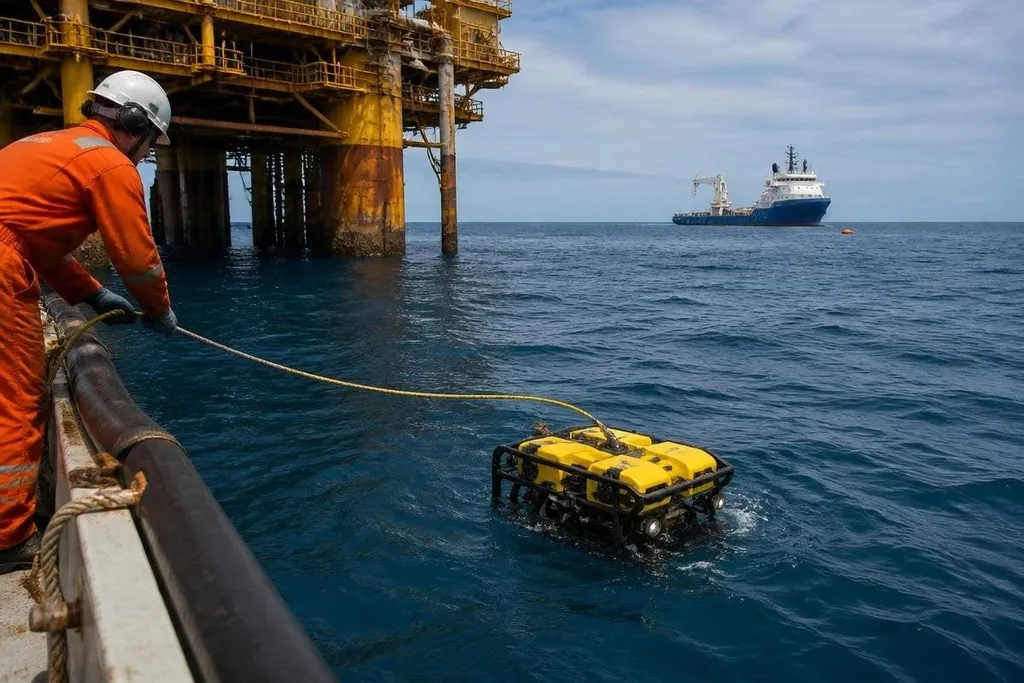
Marine robots already fit several clear jobs. Remotely operated vehicles, or ROVs, stay connected to a surface vessel through a cable. Operators use that link to control the vehicle, view live video, and send commands while it works around ships, offshore structures, pipelines, and seabed equipment.
That cable matters because it carries power and data. It also limits movement, since the surface vessel must manage the tether and stay close enough for the vehicle to reach its work area. An ROV can be a good choice when a team needs direct control and a live view of a specific site.
Autonomous underwater vehicles, known as AUVs, work with less direct control. They follow a planned route, use sensors to track depth and motion, and store data for review after recovery. Their value grows when the job covers a wide area and does not need constant video from an operator.
Why underwater work is difficult
Water blocks radio signals, reduces visibility, and adds pressure as depth increases. Saltwater also speeds corrosion, so seals, connectors, batteries, and housings need careful design and regular checks.
Cameras work well in clear water, but suspended sediment can turn the view into a gray screen. Sonar sends sound through the water and can help a robot detect the shape and position of objects when light cannot reach them. The trade-off is detail: sonar data usually needs more interpretation than a clear camera image.
Position estimates also need work without ordinary GPS. A vehicle may combine depth sensors, motion sensors, sonar, and acoustic signals from equipment on the surface. Small errors can grow during a long mission, so the route and the final location need checks after the vehicle returns.
Why the machines matter now
Marine infrastructure is spreading across large areas.
Ports, offshore energy sites, subsea cables, research stations, and aquaculture farms all need inspection or measurement. People can use a robot to collect the first set of data without sending a diver into cold water, strong currents, low visibility, or a confined space.
That does not remove people from the work. Operators still plan missions, set safety limits, check sensor data, repair vehicles, and decide what needs a closer inspection. The robot changes where people spend their time.
A seabed survey means little without its depth, route, sensor, and date beside the result. Reports from Robot24.com can put those details with a marine robot’s test, giving you a firmer basis for judging repeat surveys and recovery plans.
The strongest case is a repeatable job with a clear result. A robot that checks the same section of seabed after each storm can create a useful record over time. Sending a robot into an unknown site without a recovery plan may create more risk than it removes.
Choosing a marine robot for the job
Before a project starts, the vehicle should match the water, the task, and the way the team will use its data.
- Set the depth limit: Check the rated operating depth against the full work area, not the average depth.
- Pick the control method: Use an ROV for live operator control, or an AUV for planned routes across open areas.
- Match the sensor: Choose cameras for clear visual checks and sonar when distance, darkness, or sediment limits the view.
- Plan recovery: Set a method for locating and retrieving the vehicle if it loses power or communication.
- Check the data path: Decide where files, live video, and mission logs will be stored and reviewed.
I'd choose the simplest vehicle that can finish the defined job and return with usable data. Extra sensors and autonomy add work for the team when nobody has a clear plan for the information they produce.
Marine robots matter because the sea makes ordinary robotics assumptions fail. The next measure of progress is not a smoother demo; it is how often a vehicle can complete a real underwater task, return safely, and leave behind data someone can use.