Stormwater management has become increasingly critical in urban areas due to rapid development, increased impervious surfaces, and the growing impacts of climate change. Traditional drainage systems often struggle to handle heavy rainfall events, leading to flooding, erosion, and water quality issues. This is where geocellular storage tanks come into play. Designed to store and manage large volumes of stormwater efficiently, these innovative systems offer a sustainable and highly effective solution for stormwater management.
What Are Geocellular Storage Tanks?
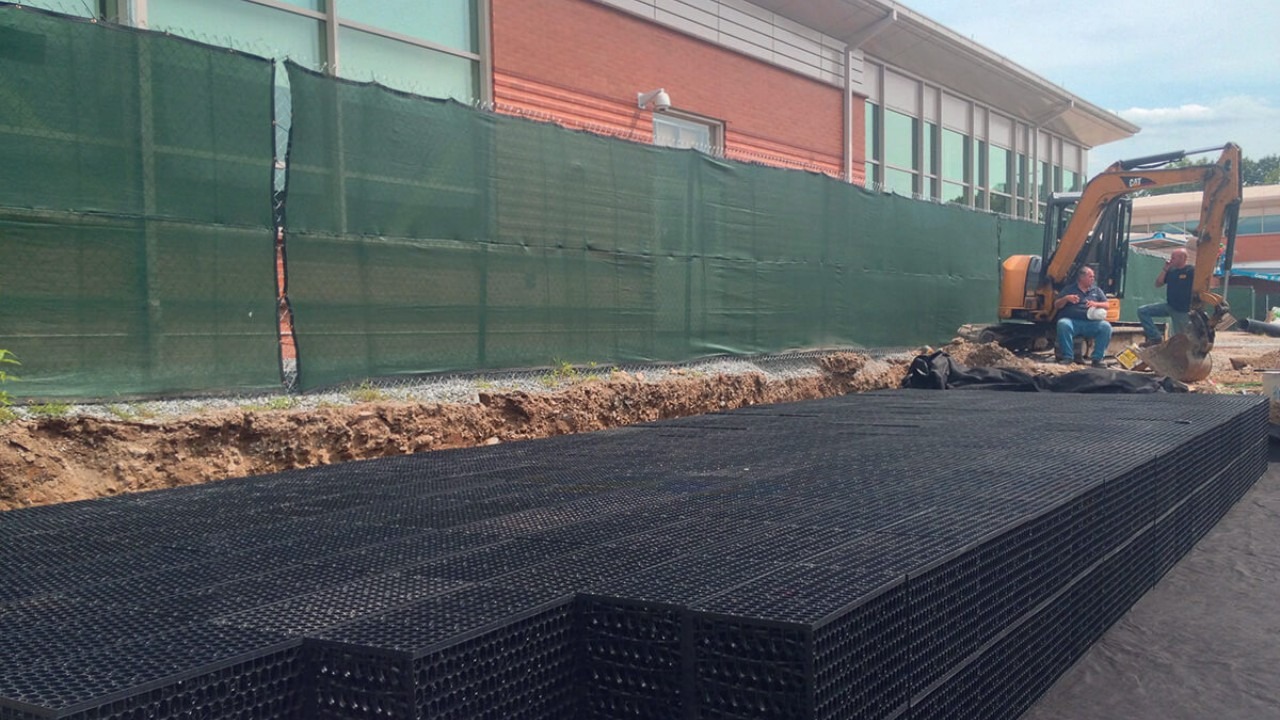
Geocellular storage tanks are modular underground structures made from high-strength plastic or concrete, engineered to provide temporary stormwater storage. Unlike conventional tanks, which rely on a single large reservoir, geocellular systems consist of interlocking cells that form a network capable of holding massive amounts of water. These cells allow water to flow freely while maintaining structural integrity, making them ideal for urban developments, car parks, sports fields, and industrial sites. The modular nature of geocellular storage tanks means they can be customized to fit various site requirements and storage capacities.
Benefits of Geocellular Storage Tanks
1. High Storage Capacity
One of the primary advantages of geocellular storage tanks is their ability to maximize stormwater capacity in confined spaces. The cellular structure allows water to be stored efficiently underground without requiring expansive surface areas. This feature is particularly valuable in urban environments where land is limited, providing an effective solution to flood mitigation without compromising valuable real estate.
2. Ease of Installation
Unlike traditional concrete tanks that require extensive excavation and lengthy construction times, geocellular storage tanks are quick and easy to install. The lightweight modular components can be assembled rapidly, reducing labor costs and minimizing disruption to existing infrastructure. Additionally, their adaptability allows for phased installations, enabling sites to expand storage capacity as future needs arise.
3. Structural Strength and Durability
Despite being lightweight, geocellular storage tanks are exceptionally strong and durable. They can withstand the loads of vehicles and heavy equipment, making them suitable for installation beneath roads, car parks, and industrial areas. The robust construction ensures long-term performance, requiring minimal maintenance while effectively storing stormwater over decades.
4. Sustainable Stormwater Management
Geocellular storage tanks support sustainable water management practices by capturing and temporarily storing stormwater for infiltration, reuse, or controlled release. This reduces pressure on municipal drainage systems, prevents flooding, and mitigates environmental impacts such as erosion and water pollution. By integrating these tanks into urban infrastructure, developers and municipalities can promote environmentally responsible development.
5. Versatility and Customization
Geocellular storage systems are highly versatile, offering a range of sizes, configurations, and installation options. Whether a site requires shallow tanks beneath green spaces or deep tanks beneath roads, geocellular storage tanks can be adapted to meet specific storage and site constraints. This flexibility ensures that every project can achieve maximum stormwater capacity while maintaining functional and aesthetic considerations.
Applications of Geocellular Storage Tanks
Geocellular storage tanks have a wide range of applications in stormwater management:
- Urban Developments: Subsurface storage tanks prevent flooding in high-density residential and commercial areas.
- Car Parks and Roads: Tanks installed beneath pavements manage runoff from impervious surfaces.
- Sports Fields and Parks: Tanks support irrigation and drainage systems while maintaining open recreational spaces.
- Industrial Sites: Facilities benefit from high-capacity stormwater storage to comply with regulations and prevent operational disruptions.
- Flood Mitigation Projects: Tanks form part of integrated strategies to manage peak flows during heavy rain events.
Design Considerations
When planning a geocellular storage tank system, several factors must be considered. Soil type, groundwater levels, and expected stormwater volume influence tank size and configuration. Hydraulic calculations are necessary to determine storage requirements, and proper installation techniques ensure long-term structural integrity. Additionally, selecting appropriate inlet and outlet structures helps control water flow, enabling the tank to function effectively during both minor and major storm events.
Maintenance of Geocellular Storage Tanks
Although geocellular storage tanks are designed for durability, periodic maintenance is essential to ensure optimal performance. Maintenance typically involves inspecting inlet and outlet structures, removing debris, and monitoring water levels during heavy rainfall. The modular design simplifies access for inspection and cleaning, making long-term upkeep straightforward and cost-effective.
Conclusion
In conclusion, geocellular storage tanks provide an innovative and effective solution for maximizing stormwater capacity in urban and industrial environments. Their modular design, ease of installation, structural strength, and sustainable benefits make them a preferred choice for modern stormwater management strategies. By integrating geocellular storage tanks into construction projects, municipalities, developers, and engineers can reduce flooding risks, improve water quality, and create resilient infrastructure capable of handling the challenges posed by increasing rainfall and urbanization. The versatility and efficiency of these tanks ensure that they are not only a practical solution today but also a forward-looking investment in sustainable water management for the future.